As the United States inches toward its 250th anniversary, it's clear that television isn't just a medium for entertainment; it's a reflection of our national identity. This article taps into the insights of industry insiders—actors, creators, critics, and avid viewers—to explore how certain TV moments encapsulate the American experience today. Notably, TIME TV critic Judy Berman highlights a striking scene in *Twin Peaks: The Return*, where David Lynch eerily reimagines the first nuclear detonation. The scene serves as a backbone for the narrative, re-emerging as a chilling reminder of a dark chapter in U.S. history. Berman notes, “Born in that Nevada desert in 1945 is a uniquely American form of evil that festers behind the quaint, small-town facades.” Yet, she offers a glimmer of hope, stating that *The Return* embodies the belief that goodness persists within the nation's spirit, urging us to confront our collective denial and strive for a better future.
It’s fascinating how the series acts as a lens through which we view the complexities of American life. The responses to the prompts in this piece sample a vast array of genres—spanning reality TV, classic sitcoms, and news broadcasts—taking us from vibrant California streets to the fictional landscapes of Queens, not to mention journeys beyond Earth itself. Each of these reflective moments serves as a mirror, showcasing how the television established today continues to resonate deeply with the country's evolving narrative.
What unfolds in the subsequent sections is a tapestry of 25 diverse responses, each offering a unique perspective on how television captures today's America while shedding light on the societal themes we grapple with collectively. If you're working in the media space, you'll appreciate the depth and variety these reflections bring to the fore. They demonstrate that TV isn't merely entertainment; it has become a powerful vehicle for commentary on our times, revealing the values, fears, and aspirations that define us as a nation.
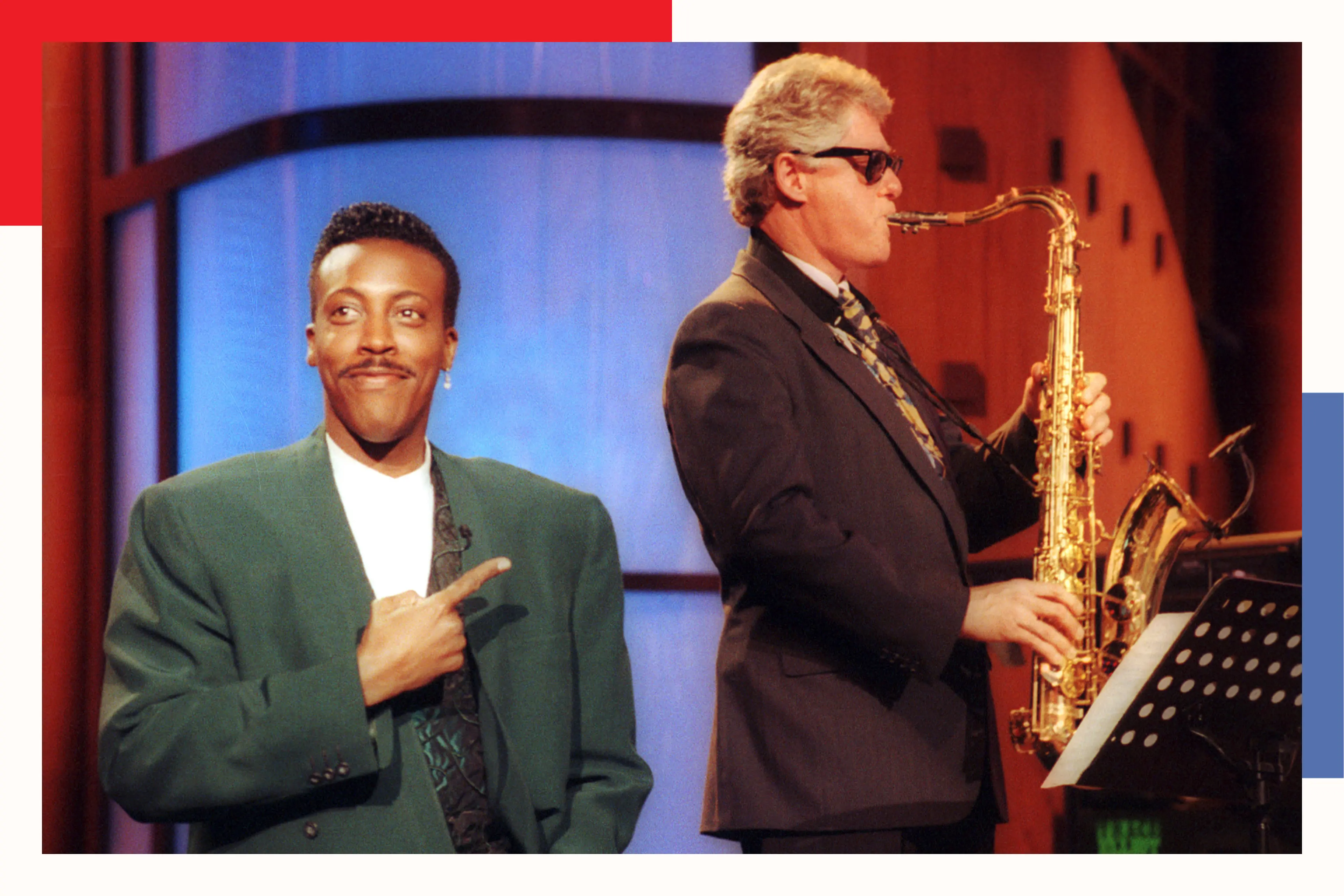
Bill Clinton's Saxophone Debut on The Arsenio Hall Show
When Bill Clinton played the saxophone on *The Arsenio Hall Show*, it was a pivotal moment that transcended typical political appearances. Daymond John, who famously shared his reflections on this event, highlighted how this spontaneous performance humanized a sitting president. Clinton's sax solo on a predominantly Black late-night platform wasn’t just entertainment; it bridged gaps between high office and ordinary American life, reminding viewers of their shared experiences and struggles. His appearance reshaped the narrative of what a president could be, painting him as approachable and relatable rather than just a hard-nosed politician.
For many Americans, this was not merely a musical interlude; it was a cultural moment that fostered connection and empathy at a time of political division. John articulated it well by reflecting on Clinton’s roots in Little Rock, Arkansas, a place emblematic of resilience and community. This kind of engagement with the public, steeped in authenticity, shifts the perception of political interactions from the sterile podium to a more relatable space where real humans exist beyond the suits and ties.
Bill Clinton plays saxophone in the musical opening of "The Arsenio Hall Show"Reed Saxon—AP
Nasa's Artemis II Mission Launch
The dramatic launch of NASA's Artemis II on April 1, 2026, was not just a historic event; it stirred the collective imagination of a nation. As Lester Holt remarked, this mission signals a fresh chapter in humanity's journey to the stars. Unlike the Apollo missions that have become cornerstone stories of American pride, Artemis II marks a key leap toward exploring beyond the moon, infusing a sense of renewed possibility into our aspirations.
With its moments broadcast to millions, the significance lies not only in its technical achievements but also in the emotional resonance it created. For an audience bombarded with the day-to-day grind of challenges, the implications of reaching for the stars can rekindle hopes. Each space mission builds on our understanding of what mankind can achieve, and Artemis II reignites an age-old wonder about exploring the cosmos—highlighting both the fragility and the potential of our existence.
NASA's Artemis II Space Launch System rocket carrying the Orion spacecraft lifts off from Launch Complex 39B at Kennedy Space Center on April 1, 2026Chip Somodevilla—Getty Images
Reflections on America’s Cultural Touchstones
Looking at the blend of humor and serious commentary from sketches like “Hot-Dog Car” and unsettling real-life moments, it becomes evident that they capture the duality of American culture. Whether it's a man in a hot-dog costume carelessly driving into a store or a celebrity assaulting another on live television, these instances challenge us to reflect on what constitutes normality in our society. Ali Barthwell's point about the “Hot-Dog Car” sketch being emblematic of what Alexis de Tocqueville referred to as “The Great Experiment” is certainly provocative. It suggests that our collective ability to laugh at absurdity often masks a deeper, more troubling reality—namely, the phenomenon of power operating outside of accountability.
Which prompts a critical question: are we, as spectators, complicity allowing this cycle to continue? Danzy Senna's observation regarding Will Smith's incident at the Oscars captures this perfectly. The applause in the face of such chaos isn’t merely a reaction to celebrity antics; it reflects a cultural willingness to overlook issues of aggression and authority. The real trick is recognizing how we disengage from outrage and simply return to the status quo, subconsciously permitting unchecked power to thrive.
You might wonder what this means for the future of our cultural narratives. As we move forward, understanding our societal moments—both comedic and tragic—could influence how we address larger systemic issues. If we remain passive observers, we risk letting these spectacles define our civic life rather than confront the vulnerabilities they reveal.
In summation, the interplay between comedy and real-life events should compel us to question our cultural responses. Are we shaping society, or are we being shaped by it? Engaging with these cultural markers is not just about consuming entertainment; it’s about actively participating in the dialogue that determines our collective moral compass.